
J&K Assembly Rejects Bill Mandating Government School Enrolment for Children of Public Servants
Srinagar: The Jammu and Kashmir Legislative Assembly on Thursday rejected a Private Members’ Bill that sought to make it obligatory for public representatives and public servants to educate their children in government educational institutions.
The Bill, moved by Langate MLA Sheikh Khursheed Ahmad, was titled ‘A Bill to make it obligatory for the Public Men and Public Servants to educate their children in Government educational institutions and for matters connected therewith or incidental thereto’ (L.A. Private Members’ Bill No. 22 of 2025).
Minister for School Education Sakeena Itoo opposed the Bill, stating the government cannot compel children to enroll in government schools as it violates their fundamental right to education.
Itoo said infrastructure in government schools was being upgraded and acknowledged that some institutions still required improvement. She said the remaining schools would also be taken up for upgradation in the future.
The Minister cited NEET qualifiers from government schools to underline that students from these institutions were achieving success.
Itoo stressed that focus should be on convincing people about the quality of government schools rather than making enrolment compulsory. She requested Khursheed to withdraw the Bill.
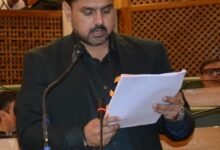
Khursheed pressed for the Bill, arguing that infrastructure alone could not improve the situation in government schools. He said enrolment was equally important and that increasing enrolment could contribute to improving the overall situation.
Policymakers should examine the issue, he said, as he argued that children of ministers, MLAs, and government employees should also be enrolled in government schools.
The Minister said legislation alone would not address the issue and emphasised that improving enrolment and strengthening government schools requires collective effort and shared responsibility.
She urged the MLA to withdraw the Bill. However, Sheikh Khursheed declined.
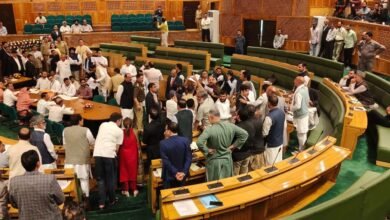
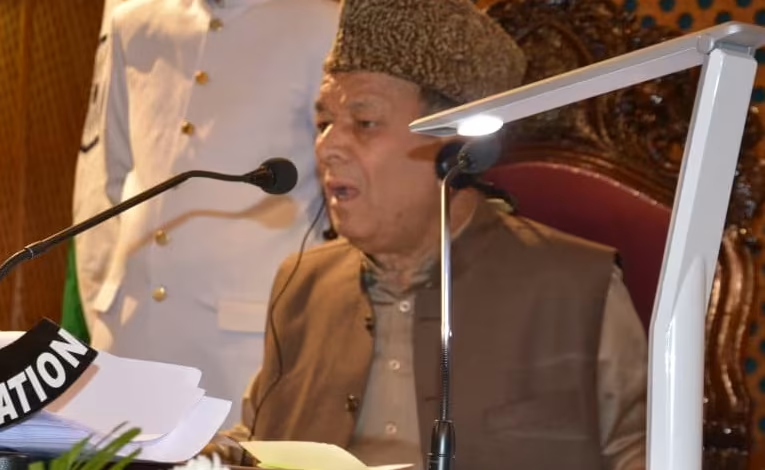
Subsequently, Speaker Abdul Rahim Rather put the Bill to vote and it was defeated by voice vote.
The assembly held its third sitting after resuming proceedings. Five Calling Attention Motions and 35 Private Members Bills were listed for business, but only a few bills were moved in the House.
Government schools in J&K face systemic challenges compared to private institutions. According to official data from the Ministry of Education, government schools in J&K average 4.8 teachers per school, compared to 13.7 teachers per school in private institutions.
Government school teachers are frequently pulled away for non-teaching administrative duties, including Booth Level Officer election duty and census data work, leaving classrooms unattended.
Infrastructure reports indicate that 20 per cent of government schools lack functional toilet facilities for female students.
The Assembly also approved a resolution granting exemption to teachers from the Teacher Eligibility Test during the sitting.